The only case management platform built exclusively for Washington workers' comp plaintiff attorneys, not adapted from Personal Injury software.
Every document from the CAC, pulled in automatically. Every statutory deadline tracked from the day a document arrives. Every appeal and rebuttal, drafted automatically from your firm's prior work, not the internet.
Built for WC plaintiff firms
Washington
Month to Month
Why PI software fails workers' comp practices.
Your everyday work is unnecessarily hard because you've been using the wrong tool all along.
Manual CAC downloads.
Spreadsheet deadlines.
Generic calendar reminders.
Copy-pasted IME rebuttals.
General practice management software is built for hourly billing and client retainers.
Personal injury platforms are built for settlement math and demand letters.
Document automation tools are built for single-matter workflows.

None of them understand statute-driven deadlines, continuous L&I document streams, BIIA appeals, or managing 200+ simultaneous claims. That's why you need the only platform built exclusively for workers' comp plaintiff firms.
The gap between what you need and what PI software gives you.
Generic case fields you rename for WC claims
Calendar reminders you manually set for each deadline
Document storage with no auto-extraction or classification
AI trained on general legal data, not your firm
Single-matter workflows stretched across 200+ open claims
Multi-year contracts with annual lock-in
Native WC claim structure: DOI, claim number, L&I status from day one
SOL engine auto-computes every deadline at 30, 14, and 7 days
Semantic extraction reads, classifies, and maps every document
AI grounded in your firm's knowledge base and case history
Built for 200+ simultaneous WC claims from the ground up
Month-to-month — cancel anytime, no lock-in
From chaos to clarity in four steps.
Stages the next action with the L&I record, document stream, and IME critique just one tab away.

Documents pulled from CAC, continuously
Read with WC taxonomy
Deadline triggered (mailing + 3)
AI helps to draft letters, stay on top of deadlines and continually monitor and manage the claim
The capabilities WC attorneys need and PI software was never designed to have.
Continuous document intake from the CAC
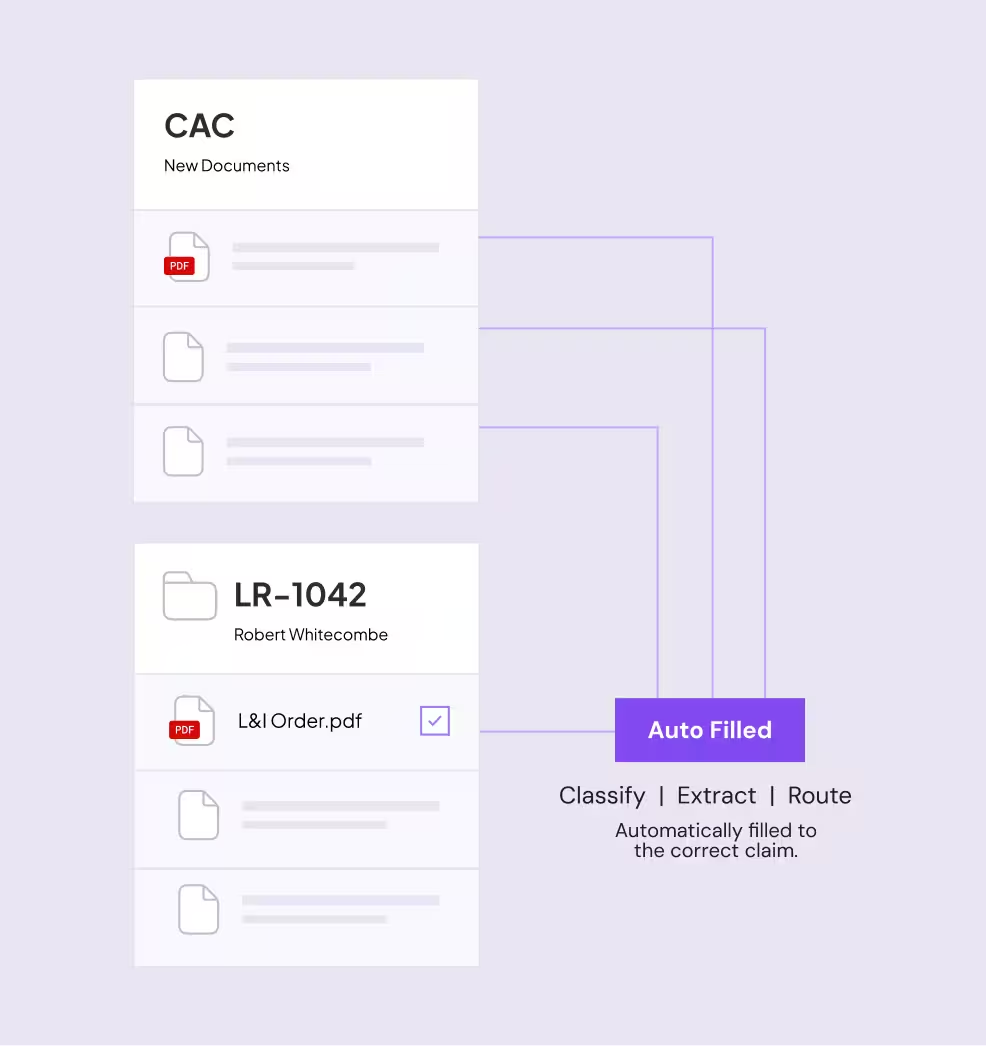
Every WC claim runs on a steady flow of documents from L&I — orders, medical records, IME reports, vocational plans, correspondence. In a typical firm, paralegals log into the Claimant Account Center multiple times a day, download new files one by one, rename them, and file them into the right matter.
The download-and-file cycle costs hours per paralegal per week. And anything missed sits in the CAC, unread, while the clock on it has already started.
Lexrio pulls documents directly from L&I's CAC the moment they arrive. Native integration. Zero manual download. Every order, medical record, IME, and correspondence lands in the right claim, in real time.
Semantic extraction reads every document
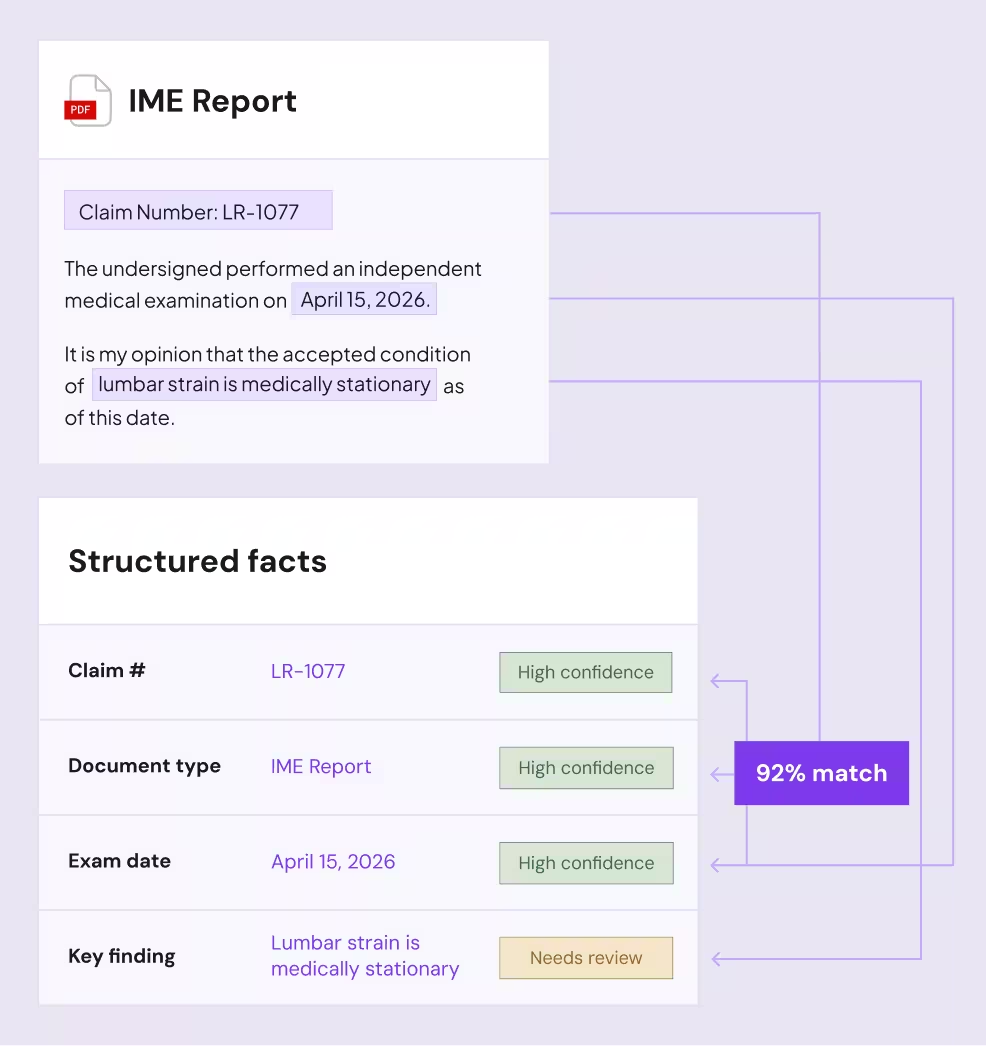
Once documents are in the system, someone still has to read them. A protest closing order isn't just a PDF — it's a deadline trigger. An IME isn't just a report — it's exposure. The work isn't filing documents. It's understanding what each one means for the claim.
WC attorneys spend 70–80% of their time on documents. Reading every page. Extracting dates, diagnoses, denials. Catching the buried sentence that starts a 15-day clock. Miss one, and a claim is lost.
Every incoming document is read by Lexrio the moment it arrives. The system extracts what matters: document type, date received, mailing date, key findings, deadline triggers. Provider, diagnosis, decision. All mapped to the claim before your team opens the file.
You read the documents that need judgement. Lexrio reads the rest.
Statute of Limitations triggered by the documents themselves
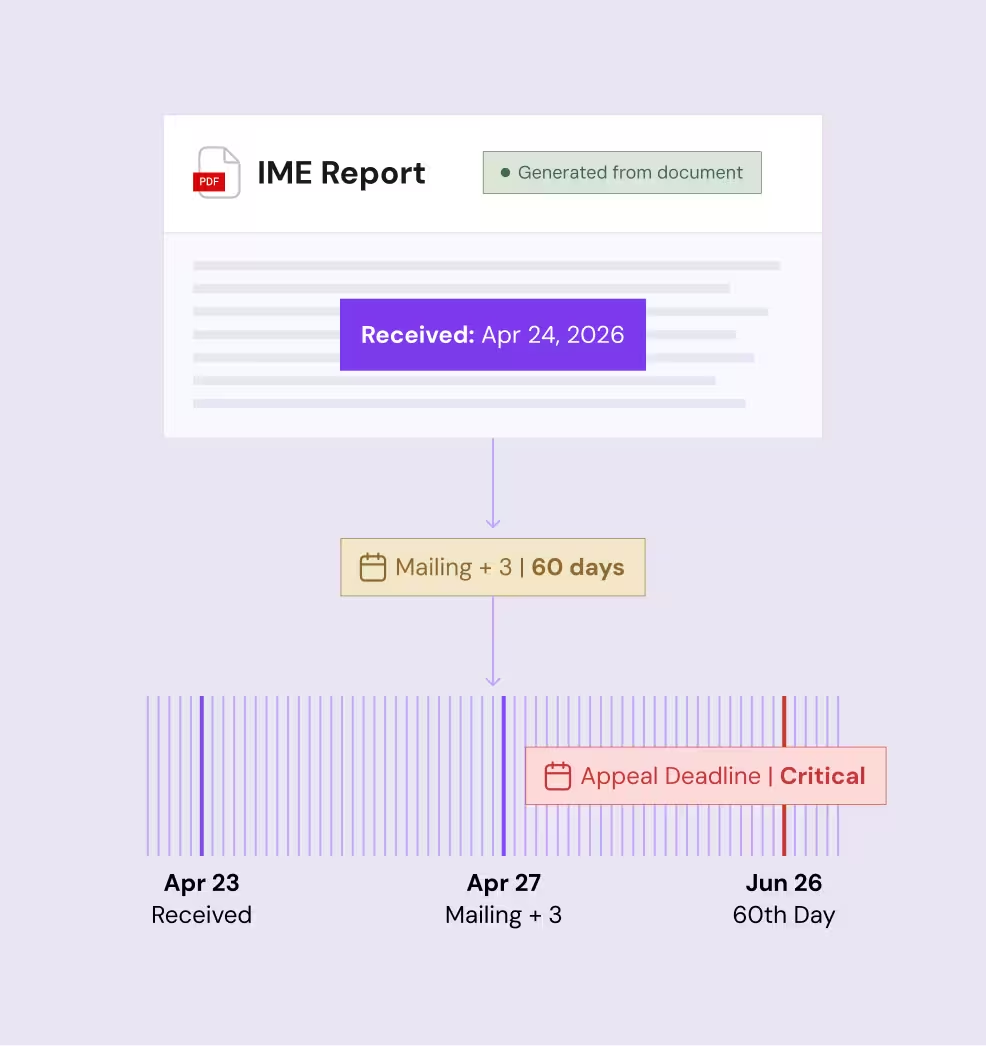
In workers' comp, deadlines don't sit on a calendar. They start when a document arrives. An order received April 10th starts the SOL clock on April 13th — mailing plus 3. A 15-day appeal window. A 60-day BIIA deadline. The document is the trigger; the deadline is the consequence.
Most firms track this in spreadsheets. Someone manually reads each document, identifies whether it's a deadline trigger, calculates the date, enters it into a calendar. Across 200+ active claims, that's hundreds of clocks tracked by hand — and the tracking is invisible until something is missed.
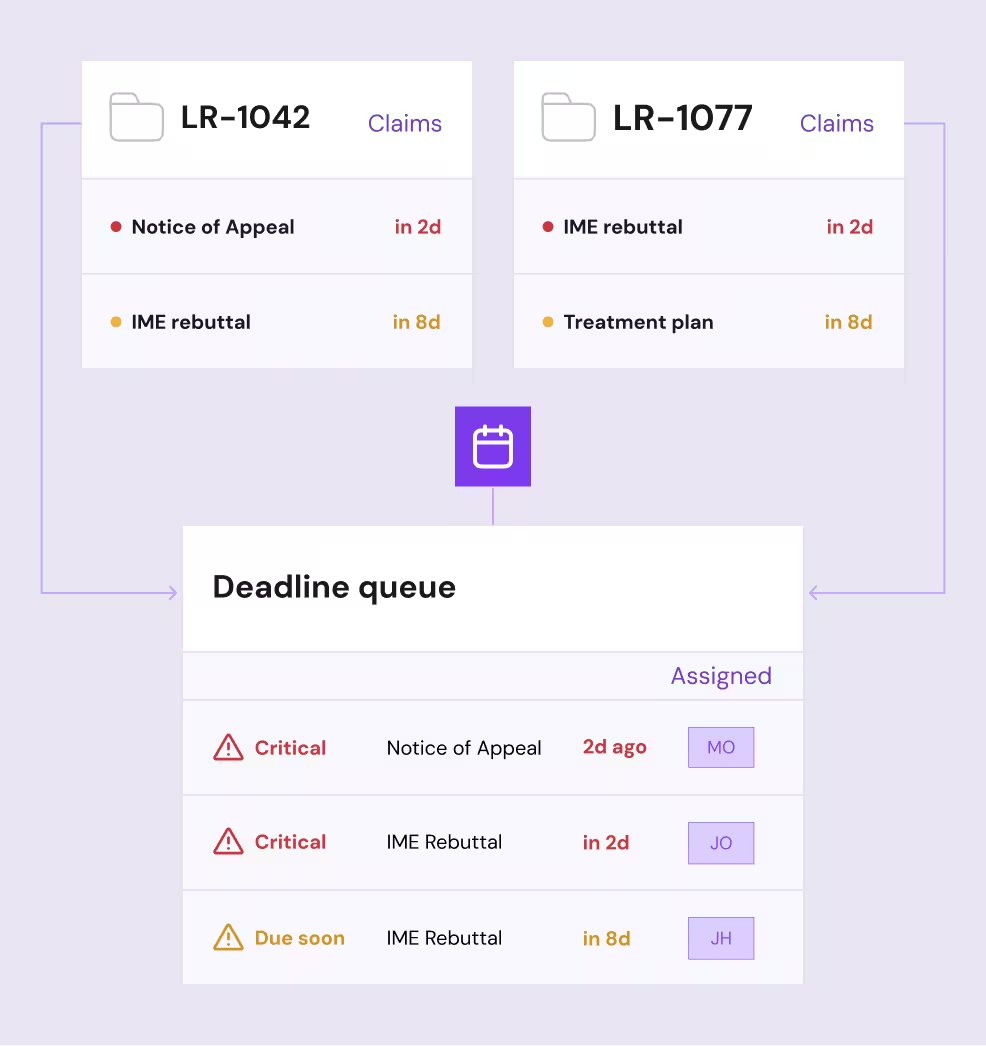
Because Lexrio has already extracted every document, it already knows which ones are SOL triggers. The clock starts automatically. Every statutory deadline — protest windows, BIIA appeal periods, reconsideration requests — auto-computed from the document's mailing date plus 3, surfaced firm-wide at 30, 14, and 7 days.
No deadline goes untracked, because the document that starts it can't go unread.
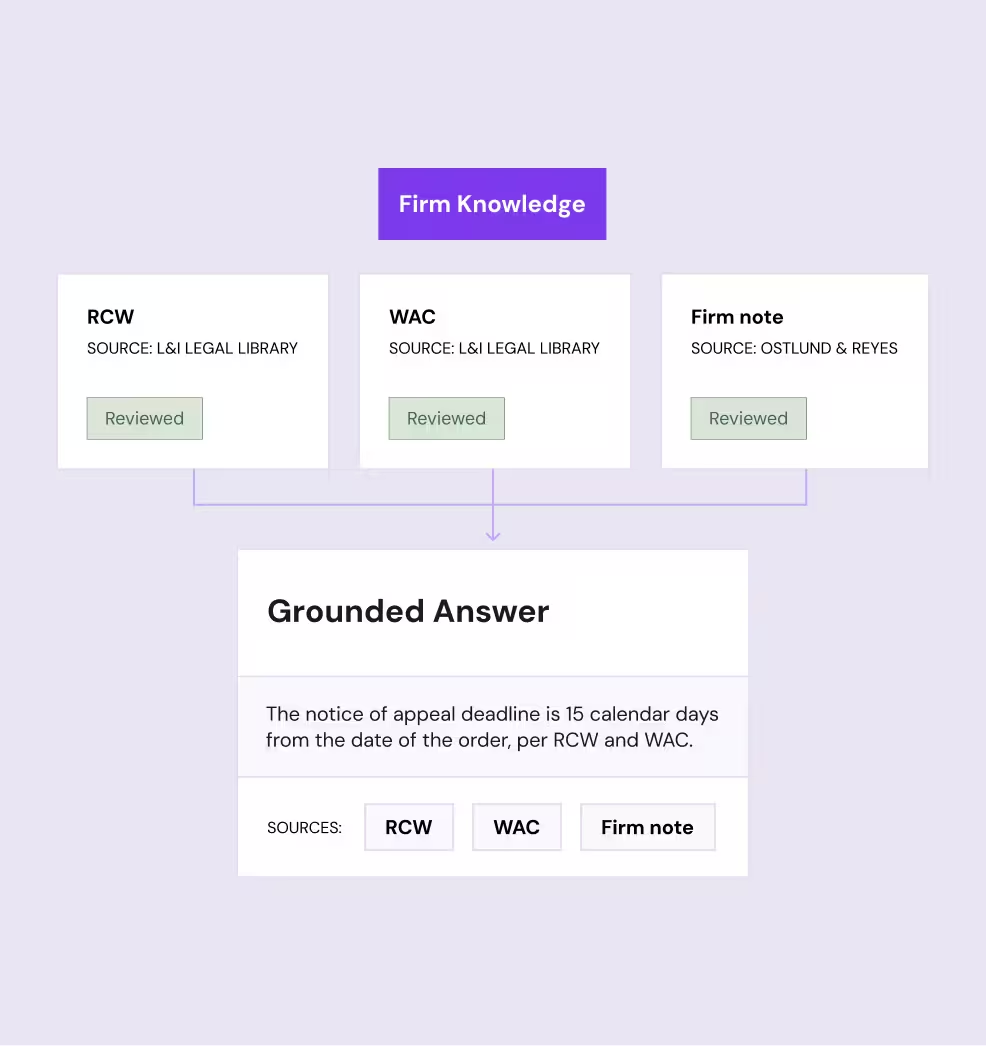
Once every document is extracted and every deadline is tracked, AI works on top of that record. Grounded in your claim and your firm, not the internet.
Citation-backed
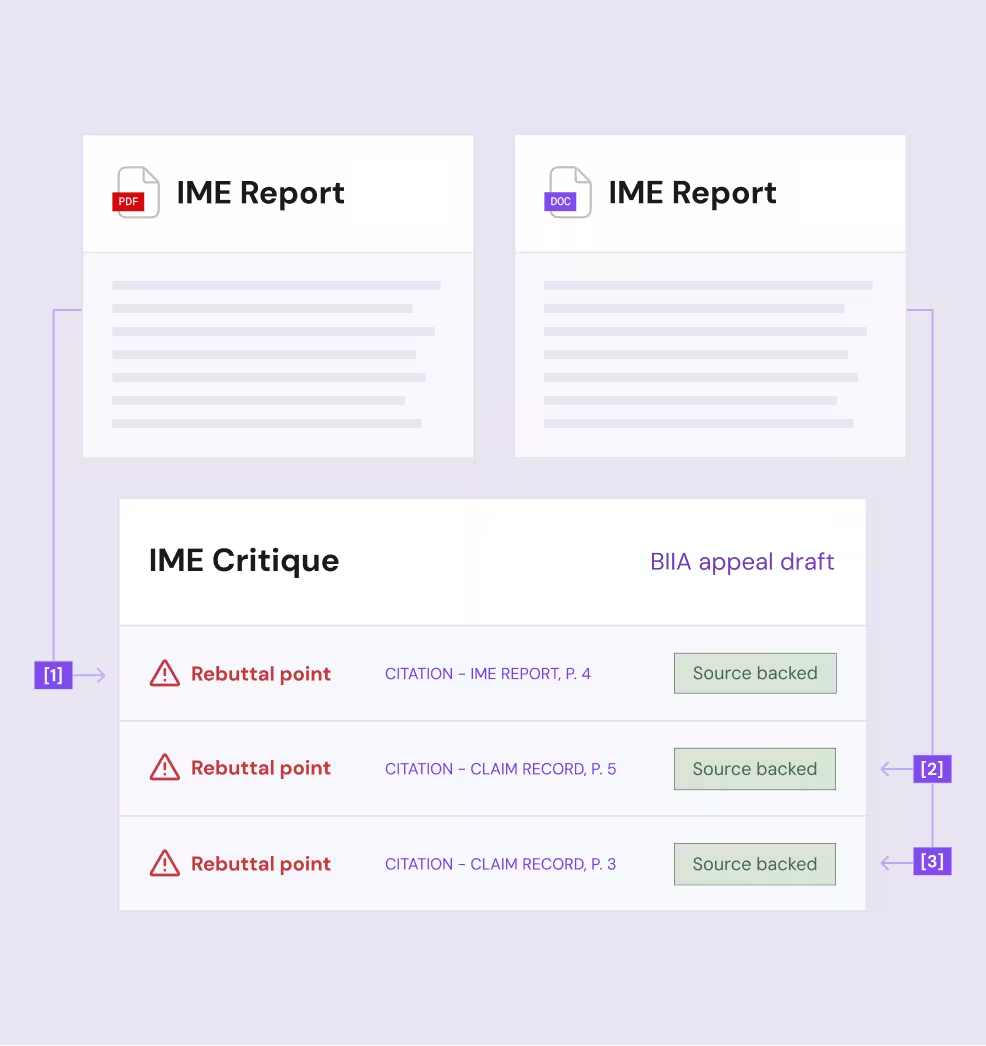
Two AI skills built for the most document-intensive work in WC plaintiff practice. The IME critique reads the exam against the full extracted claim record and produces a citation-backed rebuttal. The BIIA appeal drafts from claim history, board orders, and your firm's own arguments. Both are grounded in the documents Lexrio has already read.
Your edge
Every AI action (IME critiques, appeal drafts, task prioritisation) is grounded in your firm's own standards, prior cases, and procedures. Your competitive edge comes from your experience, not shared AI training data.
Claim lifecycle
Every task generated by the document stream and the SOL engine, not manually created. Action prioritisation tied directly to claim deadlines, so your team knows what needs to happen today, on which claim, and why.
Lexrio vs the PI software your practice has outgrown.
You've been running your practice on software that treats workers' comp as a configuration option. Lexrio treats it as the entire foundation.


The firms that live on deadlines run on Lexrio.

Lexrio is the first platform I've seen that was actually built for workers' comp from the ground up. The claim structure is native WC. The document types are what we actually use—IME reports, closing orders, vocational plans. The AI knows what a protest deadline is. Finally a system that is built for workers comp plaintiff firms.
"Lexrio's CAC integration saves my paralegal 8-10 hours per week. Deep linked claim data and Documents from L&I just show up in the right claim automatically. Every document is automatically indexed where I can search the claim like talking to an intelligence built at into every claim. This feature alone justified the switch from the generic legal case management system we were using."
Meet the leadership

Sanjeev Batta
Founder & CEO
Sanjeev founded Lexrio to bring the same operational rigor he has spent two decades building into other regulated industries. As President of Cayzen Technologies since 2000, he has delivered IT solutions to government agencies and private enterprises.
In 2013, he founded Gardiant, reshaping case management for the workers' compensation and disability sectors. His earlier ventures include Brightsteps, focused on early childhood developmental screening, and Claim-Maps, focused on operational analytics in workers' compensation.
At Lexrio, he sets the product direction and leads the company’s vision for how legal teams should work with their data, drawing on a career that began in deeply technical roles, including Architect at Astera Software and Director of Application Development at First source.

Andy Slade
Co-Founder & CTO
Andy Slade is Chief Technology Officer and AI Architect at Lexrio, bringing 20+ years of enterprise architecture and M&A system integration experience to building the only case management platform designed exclusively for workers' compensation plaintiff attorneys.
Previously, Andy led large-scale technical transformations for BAA (Heathrow), Capita Financial Services, Link Group (MUFG), and Deutsche Börse including M&A post-acquisition integrations, security architecture programs, and multi-million-pound infrastructure rebuilds for highly regulated industries.
At Lexrio, he architects the native state agency integration, auto-computed SOL engine, and firm-grounded AI capabilities that distinguish purpose-built WC case management from adapted PI software. He advocates for ethical AI use and secure cloud architecture in legal technology.
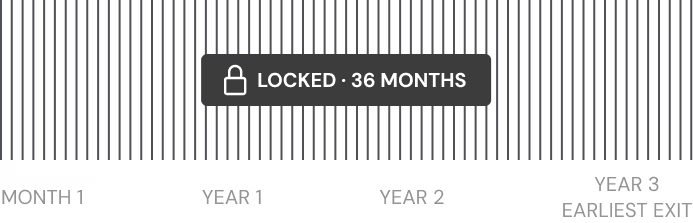
Don’t get locked into a 3 year contract. Adopt a month-to-month delivery with Lexrio.
Now that you know your current software was not built for workers’ comp, try Lexrio on a single case. You'll never work the same way again.
3 year lock in
Multi-year contracts. No exit until renewal.
Month to month
Cancel anytime, no penalty. Try it on a single case.


Work the claim. Not the workaround.
Lexrio is opening early access to Washington State workers' comp plaintiff firms. If you're managing 100+ active claims and running them on software that was never built for your practice — this is what you've been waiting for.